
What is branding — and why does it matter to your business?
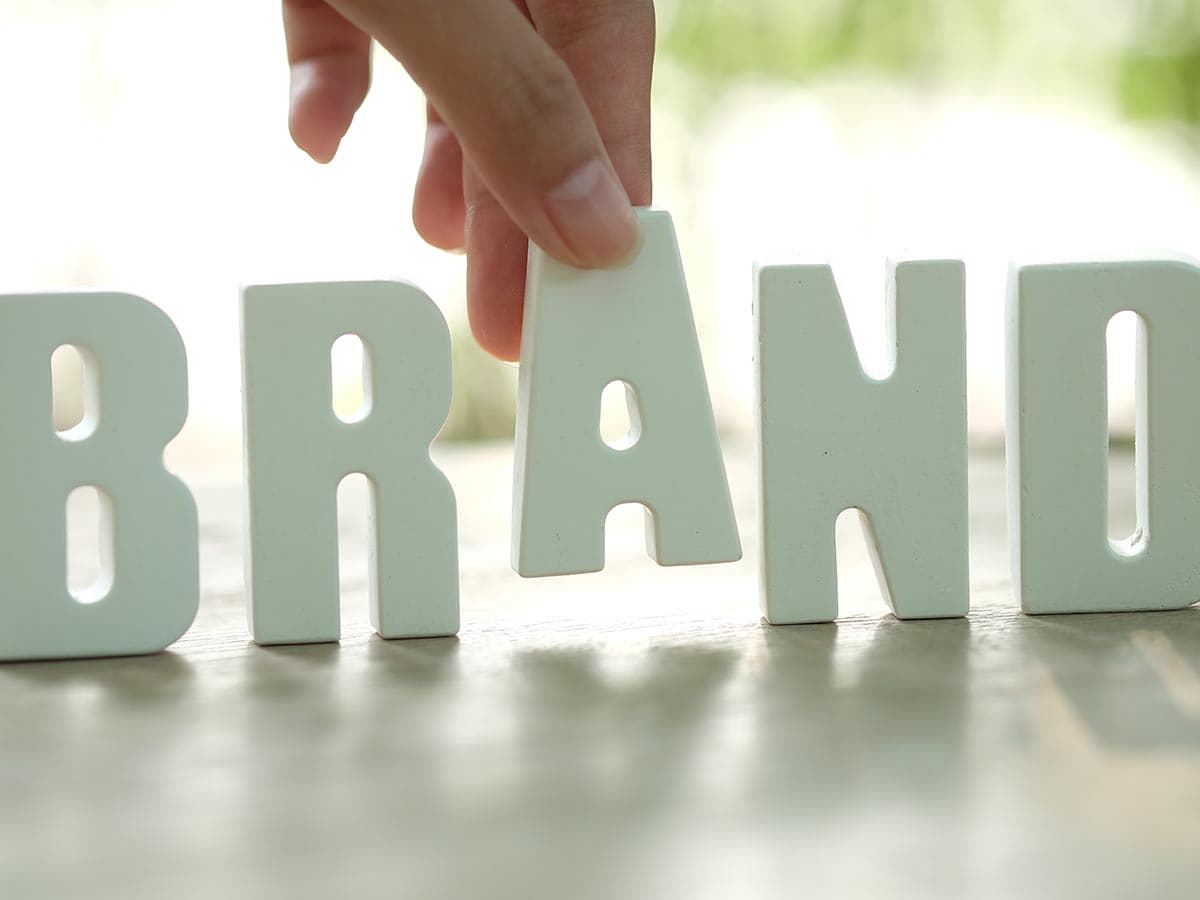
Branding is one of those words that gets used constantly and understood rarely. Ask ten business owners what branding means and you'll get ten different answers — most of them focused on logos, colours, and fonts. That's not branding. That's design.
Branding is the reason a customer chooses you over a competitor who offers something technically similar, and it's the reason they come back. Get it right and it becomes your most valuable business asset.
Why branding matters more than most B2B businesses think
Most owner-managed businesses underestimate the role branding plays in their commercial performance. It's easy to see why. Branding feels intangible — you can't put it on a spreadsheet the way you can cost-per-lead or conversion rate. But the evidence is clear: strong brands command higher prices, close faster, and retain customers for longer.
According to McKinsey & Company, B2B companies with strong brands outperform weaker ones by 20% on EBIT margin — that's operating profit, before interest and tax. That's not a marginal advantage — it's the difference between a business that competes on price and one that doesn't have to.
The reason branding is often deprioritised is that its effect is cumulative. It doesn't deliver a return in the same quarter you invest in it. But compound that effect over three or five years and the gap between branded and unbranded competitors becomes very wide indeed.
What is branding, exactly?
Branding is the sum of everything a customer thinks, feels, and believes about your business — most of which you didn't tell them directly. It is the perception your business occupies in the market, shaped by every interaction a customer has with you: your website, your proposals, the way your team answers the phone, the quality of your work, and yes, your visual identity too.
A strong brand does five things consistently:
- Creates a clear, desired position in your market
- Differentiates you from competitors in a way that is felt, not just stated
- Builds recognition and recall — customers think of you first
- Communicates your values without you having to explain them
- Creates an emotional connection that price alone cannot disrupt
The last point is the one most B2B businesses miss. Emotion drives purchase decisions in consumer markets — everyone accepts that. But it drives B2B decisions too. Buyers are human beings, and human beings buy on instinct and justify with logic. Your brand shapes the instinct.
What good branding looks like in practice
Think about motorcycle manufacturers for a moment. Honda, Suzuki, Kawasaki, Yamaha, Ducati, Aprilia, Triumph — they all make motorcycles, they all have engines and two wheels, and you can compare their specifications in a spreadsheet. But they don't compete in the same way at all.
The Japanese brands are respected for engineering precision and reliability. Ducati and Aprilia are associated with Italian passion, aesthetic beauty, and performance — even if the build quality is debated. Triumph has carved out a position as the bike for someone who wants something quintessentially British, with character and heritage.
Each of those positions was built deliberately, over time, through consistent product quality, communication, and customer experience. None of it happened by accident. And the result is that buyers self-select. A Ducati buyer isn't cross-shopping a Honda. The brand has done the qualification work before the customer ever walks into a dealership.
The same dynamic exists in B2B. The businesses that win on brand are the ones whose customers already feel confident before the first meeting. Branding gets you shortlisted. Everything else gets you the contract.
Can you build a brand around even the most basic product?
Yes. And it's one of the most commercially interesting challenges in marketing.
One project I worked on involved creating a brand for a new potato — the Norfolk Peer. Think about that for a moment: a potato. One of the most generic, undifferentiated products imaginable, in a category where the few brands that did exist were already well established.
The insight that unlocked the brief was simple: most people have no idea how good a freshly dug, high-quality new potato actually is. The product was genuinely superior. Freshly picked, steamed or boiled, the difference in flavour was remarkable. So the brand focused on provenance, freshness, and quality — and the packaging reflected that positioning: black and gold, premium, deliberate.
The Norfolk Peer went into supermarkets and foodservice markets. Sales exceeded all expectations. The brand created demand for a product that, without it, would have competed purely on price.
That's what branding does. It creates the conditions in which your product or service can be valued properly — not just bought cheaply.
If you're working through what your brand stands for and how to express it in the market, that's a conversation we have with businesses regularly at One Vision.
What branding is not
Branding is not a logo. A logo is an identifier — it's the mark that signals your brand, but it carries no meaning on its own until you earn it. The Nike swoosh means something because of everything Nike has done to put meaning into it. On day one, it was just a shape.
Branding is not a tagline, a colour palette, or a brand guidelines document. These are tools for expressing a brand — they're not the brand itself.
And branding is not a substitute for delivery. A strong brand creates expectation. If your product or service doesn't meet it, the brand accelerates your decline rather than supporting your growth. The two have to work together. The brand promises; the business delivers.
According to Bain & Company, sustained value creators — businesses that achieve long-term profitable growth — have Net Promoter Scores two times higher than the average company, and on average grow at more than twice the rate of competitors. Reputation, once built, is fragile. Protect it by treating the brand as a standard to live up to, with a story to tell.
How to think about your brand as a business asset
The most useful way to think about your brand is as a commercial asset — one that either adds value to your business or subtracts it. There is no neutral ground. If customers can't form a clear impression of who you are and why they should choose you, they'll fill that gap themselves, usually unfavourably.
A strong brand allows you to:
- Charge a premium — customers pay more for brands they trust
- Reduce your sales cycle — a recognised brand shortens the trust-building phase
- Retain customers for longer — loyalty is a brand outcome, not just a service one
- Attract better talent — people want to work for businesses they respect
The HubSpot State of Marketing Report consistently shows that inbound marketing generates three times more leads than outbound methods, at 62% lower cost. A clear, trusted brand is what makes inbound work — it's the reason a prospect clicks, reads, and reaches out in the first place. Without it, you're paying to drive traffic to a destination that gives people no reason to stay.
Ask yourself this: when a potential customer finds you — through a search, a referral, or a LinkedIn profile — what impression do they form in the first 30 seconds? Is that the impression you want them to have? If you're not certain, that's where the work starts.
What should you do next?
Start with the question your customers would answer differently to the way you would. Ask a handful of existing customers — particularly the ones you'd most like to replicate — why they chose you and why they stayed. The language they use, the reasons they give, the things they valued that you didn't expect: that is your brand, as it actually exists in the market.
Compare that to how you currently describe yourself. If there's a gap — and there usually is — closing it is the most commercially valuable marketing work your business can do.
Branding isn't just about looking good. It's about being understood correctly, by the right people, at the right time. That's a business problem, not a design problem. Approach it as one.
Frequently asked questions
What is branding in simple terms?
Branding is the impression your business creates in the minds of customers — what they think, feel, and believe about you based on every interaction they have with your business. It is not just your logo or visual identity; it is your reputation, your positioning in the market, and the reason customers choose you over a competitor.
What is the difference between branding and marketing?
Branding defines who you are — your values, your positioning, and the perception you want to create. Marketing is the activity you use to communicate that to the right audience. Branding comes first. Without a clear brand, your marketing has nothing of substance to express. Branding is the strategy; marketing is the execution.
Why is branding important for small and medium-sized businesses?
Because smaller businesses often compete against larger ones with bigger budgets, a strong brand is one of the few advantages that cannot simply be outspent. A clear, credible brand helps you command a premium, shorten your sales cycle, and retain customers more effectively. According to McKinsey, B2B businesses with strong brands outperform weaker ones by 20% on EBIT margin — their operating profit before interest and tax.
How long does it take to build a brand?
Building a brand is a long-term investment, not a campaign. The foundational work — defining your positioning, articulating your values, ensuring your visual and verbal identity reflects them — can be done relatively quickly. But building genuine recognition and trust in your market takes years of consistent delivery and communication. The businesses that benefit most from strong branding are those that treat it as a permanent standard, not a one-off project.
Can a brand be built around a commodity product?
Yes, and it is often where the greatest commercial advantage lies. When a product is seen as a commodity, buyers default to price. A strong brand changes that dynamic by creating perceived value — through provenance, quality, trust, or emotional association — that price alone cannot replicate. The Norfolk Peer potato is a practical example: a brand built around freshness and provenance in a category with almost no branded competitors, which drove sales significantly beyond forecast.

Need clearer marketing direction?
One Vision is a Norfolk-based marketing consultancy. We work with SMEs across the UK to build practical marketing strategies that focus effort, reduce wasted spend, and drive growth.
Get in touch